Issue #119
Read about infrastructure and programming topics and news every week

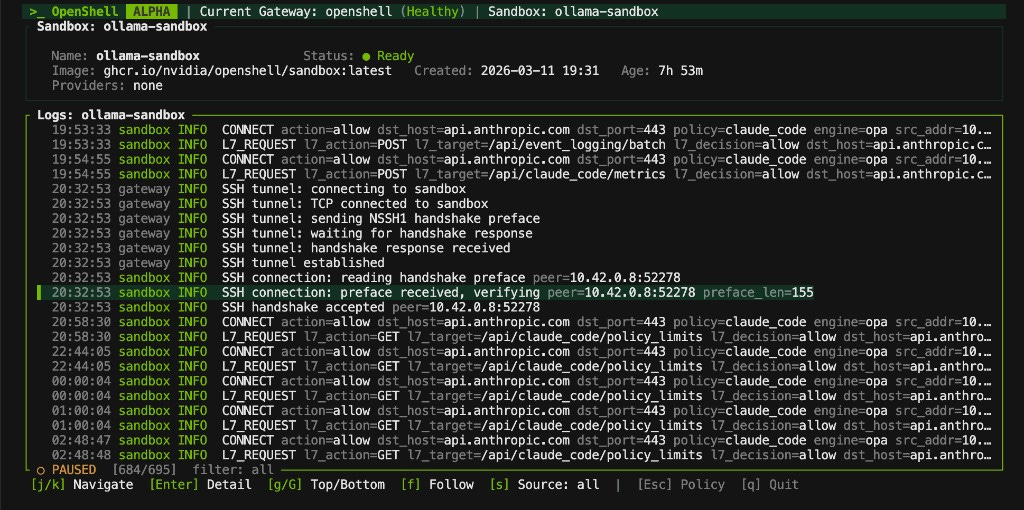
Nemoclaw
Yesterday, Nvidia announced a version of NemoClaw to run OpenClaw with increased security and privacy: https://www.nvidia.com/en-gb/ai/nemoclaw/.
There is a long list of very important companies already building on it: https://nvidianews.nvidia.com/news/ai-agents.
There is a page with more technical information about nemoclaw: https://build.nvidia.com/nemoclaw.
Basically, Nvidia Open Shell, which has already been running other agents, can now run OpenClaw too.
https://github.com/NVIDIA/OpenShell
OpenShell vs OpenAI and Anthropic
OpenAI and Anthropic give the model and SDKs, in other words, the developer tools. With OpenShell, Nvidia gives the model a prison cell, a gatekeeper, and a tool cabinet with policy locks.
NemoClaw likely has an edge when you care about:
local or private execution
hard egress controls
filesystem confinement
operator-controlled inference routing
auditable policy as config
enterprise or regulated environments
OpenAI and Anthropic currently look stronger for:
developer ergonomics
broader hosted tool integrations
faster path to production for typical SaaS agents
multi-agent orchestration frameworks
larger surrounding ecosystem and examples
NemoClaw is interesting because it is attacking a different layer of the stack. Most agent frameworks answer:
How does the model use tools?
NemoClaw answers:
Under what infrastructure policy is the model allowed to exist at all?
That is a meaningful shift. If you are building internal agents with access to code, documents, terminals, or corporate networks, this runtime-level approach is strategically important. If you are building a normal web product and want fast iteration, OpenAI or Anthropic-style hosted agent stacks are probably still the more mature path today. That final judgment is an inference from the current official documentation and the early state of NemoClaw’s launch materials.
Conclusion
For a local dev environment, the simplest way to think about it is that you need one OpenShell gateway container, and inside that gateway NVIDIA runs its embedded K3s control plane, while each agent/session gets its own separate sandbox container managed by the gateway; so if you launch one agent, that is effectively two containers total from your point of view — the gateway container plus one sandbox container — but not a second standalone K3d/K3s container that you manage yourself.
This is alpha software. I reckon that in the future, a Kubernetes cluster will have the gateway and required control software, with one pod/container per sandbox.